Introduction
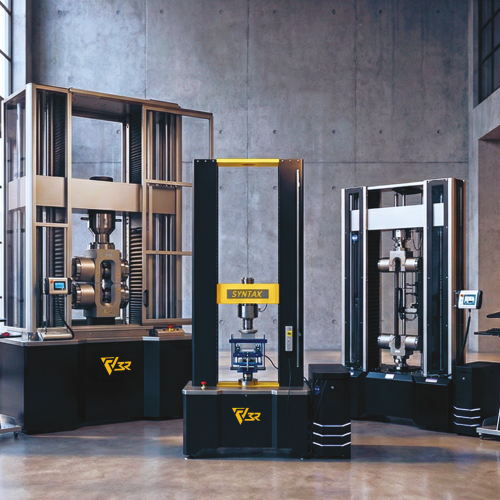
A universal testing machine (UTM) is often selected when a laboratory needs to perform several types of mechanical testing on one or more materials, including tensile, compression, flexural, shear or other specific tests.
It can meet a wide range of requirements, including setting up a new laboratory, bringing testing activities in-house, replacing an ageing machine, increasing testing capacity or supporting new material characterisation needs.
Selecting a UTM is not simply a matter of choosing the required load capacity in kN. A suitable configuration should also take into account :
- the materials being tested ;
- specimen dimensions ;
- applicable standards or test methods ;
- grips and fixtures ;
- strain measurement ;
- test control software ;
- operator safety ;
- installation requirements.
As a French designer and manufacturer of testing machines, 3R Industries supports laboratories, R&D centres and industrial facilities in defining solutions tailored to their materials, testing procedures and working environment.
What is a universal testing machine ?
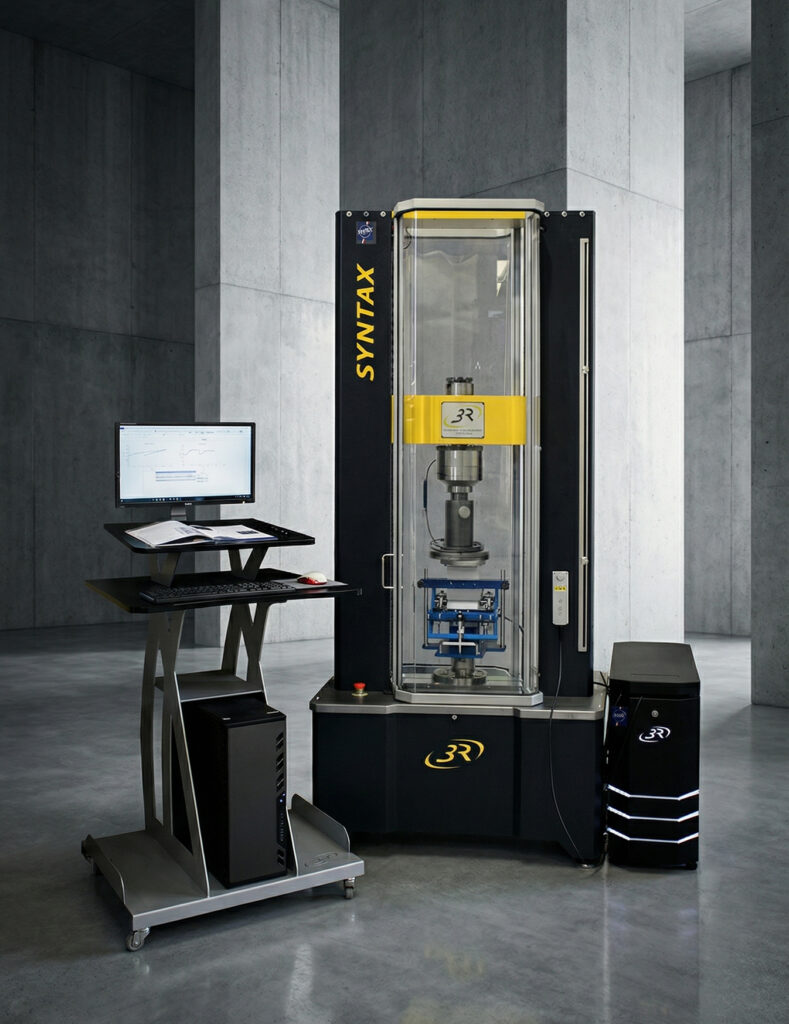
A universal testing machine (UTM) is a piece of equipment designed to apply a controlled load to a specimen, component or assembly. It measures the mechanical behaviour of a material using data such as force, displacement and strain.
A universal testing machine (UTM) is a piece of equipment designed to apply a controlled load to a specimen, component or assembly. It measures the mechanical behaviour of a material using data such as force, displacement and strain.
This versatility makes it a key piece of equipment in testing laboratories, quality departments, R&D centres, educational institutions and industrial facilities.
What tests can be performed with a universal testing machine ?
A universal testing machine can perform several categories of mechanical testing, depending on the installed fixtures, sensors and accessories.
Typical applications include :
- tensile testing to measure elongation, ultimate strength or failure ;
- compression testing to characterise material behaviour under compressive loading;
- three-point or four-point flexural testing ;
- shear testing ;
- peel testing ;
- testing of mechanical assemblies ;
- testing of cables, straps, ropes, tubes and other specific components ;
- temperature testing using an environmental chamber or furnace.
Selecting the right accessories is therefore just as important as selecting the testing machine itself. When correctly configured, a UTM can evolve with the laboratory’s future requirements, provided that both current and future testing needs have been considered.
Which materials and industries are concerned ?
Universal testing machines are used whenever materials need to be characterised, production monitored or components qualified.
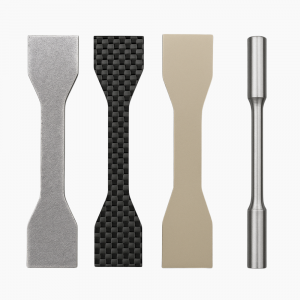
They can be configured for a wide range of materials, including :
- metals and alloys ;
- plastics and polymers ;
- composites ;
- rubber and elastomers ;
- cables, wires, ropes and webbing ;
- mechanical assemblies ;
- finished parts and industrial components ;
- application-specific materials.
They are widely used in sectors such as :
- manufacturing
- metallurgy
- plastics processing
- aerospace
- automotive
- railway
- energy
- research and education
- testing laboratories
- certification centres.
This diversity explains why the machine should always be selected according to the intended application rather than simply on the basis of its rated capacity.
Selection criteria for a universal testing machine
Load capacity and force range
Load capacity should be determined according to the material being tested, specimen cross-section, test type and expected maximum load. The objective is to cover current testing requirements while allowing sufficient margin for future developments.
An undersized machine may limit the range of tests that can be performed. Conversely, an excessively high load capacity is not always appropriate for low-force applications, where the effective measuring range should remain consistent with the required level of accuracy.
Load frame, control system and safety
The load frame must provide sufficient rigidity and guidance to ensure test stability. This is particularly important for sensitive materials, low-strain measurements or brittle failure tests.
The control system should match the test procedure, whether displacement, force, stress or strain controlled. Operator safety should also be considered from the outset, including safety guards, access to the test area, loading ergonomics and protection against specimen failure.
Grips, fixtures and accessories
Tensile grips, compression platens, flexural fixtures and shear fixtures have a direct influence on test quality. They must be suited to the specimen geometry, material and applicable test method.
Tensile grips, compression platens, flexural fixtures and shear fixtures have a direct influence on test quality. They must be suited to the specimen geometry, material and applicable test method.
Strain measurement
Crosshead displacement alone is not always sufficient to accurately measure the actual strain of the specimen. In such cases, an extensometer is used to measure elongation over a defined gauge length.
It is particularly valuable when determining Young’s modulus, yield strength or precise elongation values, especially for metals, engineering plastics, composites or temperature testing.
Test software and reports
The test control software should enable users to create test methods, control the machine, monitor curves, calculate results, generate reports and export test data.
Clear and intuitive software improves day-to-day operation, test repeatability, result traceability and operator autonomy.
Conclusion
A universal testing machine is a key piece of equipment for material characterisation, enabling multiple mechanical tests to be performed using a single load frame. Its selection should always be based on the intended application, taking into account the materials, specimens, load capacity, fixtures, strain measurement, software, safety and installation requirements.
Do you have a UTM project ? 3R Industries can help you define a universal testing machine tailored to your testing requirements, materials and laboratory environment.
FAQ
Can a universal testing machine be custom designed?
Yes. A universal testing machine can be configured or custom designed when specimen dimensions, stroke, load capacity, testing environment or fixtures cannot be accommodated by a standard configuration.
What budget should be expected for a universal testing machine?
For most projects, the cost of a universal testing machine typically ranges from 2,000€ to 200,000€ (excluding VAT). The final investment depends largely on the configuration, including load capacity, test space dimensions, grips, fixtures, extensometry, software, installation, training, safety options, environmental chamber and any custom engineering requirements.