A material may perform well during a conventional static test but behave differently when subjected to repeated loading cycles, a sustained load or a specific temperature.
For a laboratory, R&D centre or industrial manufacturer, the challenge is therefore to select the right test to answer a straightforward question: will the material or component retain its properties over time and under its actual service conditions?
As a French designer and manufacturer of testing machines, 3R Industries supports laboratories and industrial facilities in defining suitable configurations, including universal testing machines, fatigue testing machines, creep testing machines, temperature testing systems, fixtures, sensors and test control software.
Why is a static test not always sufficient?
Static testing, such as tensile, compression or flexural testing, is used to characterise a material at a given point in time. It provides essential information, including maximum strength, elongation, modulus, failure behaviour and yield strength.
However, some applications require more extensive evaluation. A component may be subjected to repeated loading, a sustained load, high temperatures or cold environments. In such cases, initial strength alone may not be sufficient to predict long-term behaviour.
Fatigue, creep and temperature testing are therefore used to complement the mechanical characterisation of a material.
Fatigue testing : assessing resistance to repeated loading cycles
Fatigue testing is used to assess the ability of a material or component to withstand repeated loading. It is particularly useful when a component is subjected to load cycles, vibration, alternating loads or repeated movements.
This type of testing is important for components that may not fail under a single load but can crack or lose their properties after a large number of cycles.
Applications may include :
- metal components subjected to vibration ;
- mechanical assemblies ;
- automotive or railway components ;
- composite materials ;
- structural components or fasteners ;
- cables, flexible elements or components subjected to in-service loading.
A fatigue testing machine applies and controls these repeated loads while monitoring changes in material behaviour, including the number of cycles, loss of stiffness, crack initiation and failure.
Creep testing : measuring deformation under sustained load
Creep testing involves subjecting a material to a sustained load for a defined period in order to measure its progressive deformation over time.
This test is useful when a material must retain its shape, dimensions or function under prolonged stress. It is particularly relevant to polymers, composites, metals, assemblies and materials used in structural applications.
Creep behaviour can be especially important when temperature affects the material’s performance. A component may remain stable at room temperature but deform more rapidly at elevated temperatures or under long-term loading.
A creep testing machine monitors this evolution over time and provides useful data for comparing materials, validating a formulation or assessing behaviour under sustained stress.
Temperature testing : assessing performance under hot or cold conditions
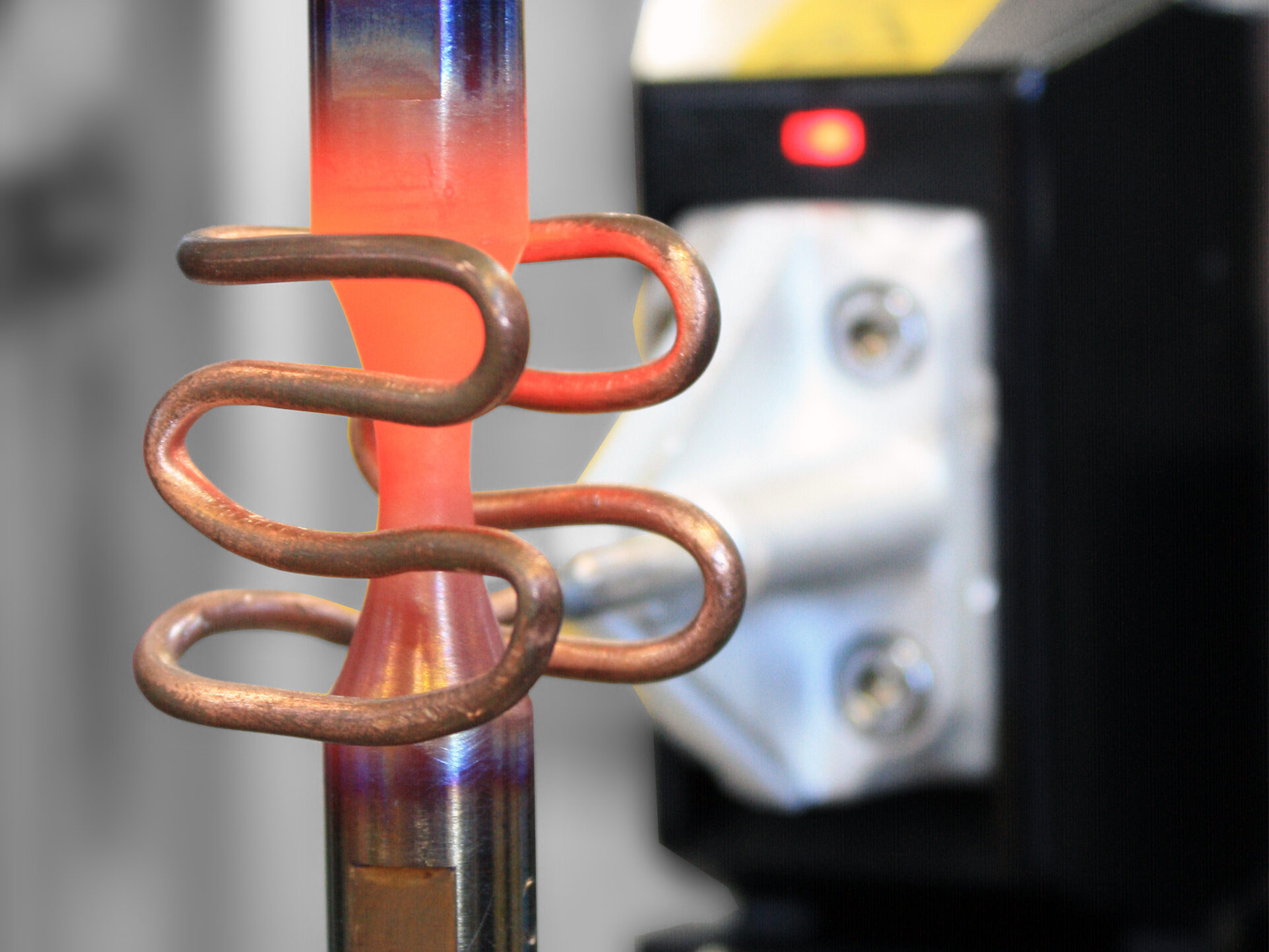
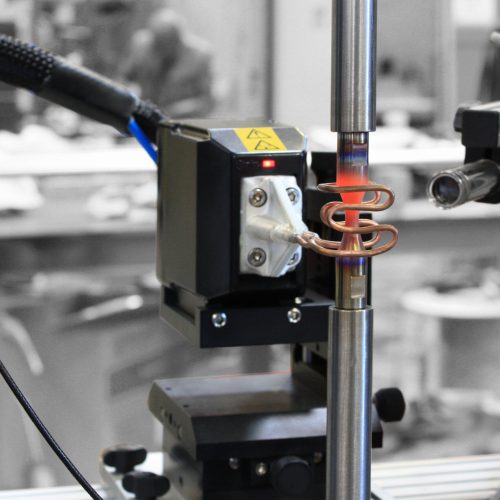
Temperature testing is used to assess whether a material retains its mechanical properties when tested under hot, cold or controlled thermal conditions.
It can be applied to various types of mechanical testing, including :
- tensile testing at controlled temperature ;
- compression testing at controlled temperature ;
- flexural testing at controlled temperature ;
- instrumented testing with strain measurement ;
- specific testing according to the material or component.
These tests are particularly useful for polymers, composites, metals and assemblies used in demanding environments. A material may lose stiffness at elevated temperatures, become more brittle at low temperatures or behave differently after thermal stabilisation.
Depending on the application, the test configuration may include a thermal chamber, furnace, suitable grips and a high-temperature extensometer.
Measuring changes in mechanical behaviour
Assessing a material’s long-term performance is not limited to determining whether it fails. It also involves measuring how its mechanical properties evolve during or after testing.
Monitored parameters may include :
- applied force ;
- displacement ;
- strain ;
- number of cycles ;
- duration under load ;
- test temperature ;
- loss of stiffness ;
- elongation ;
- failure or stop criterion.
The extensometer and test control software play an important role in this process. They allow data to be monitored, results to be calculated, multiple tests to be compared and full traceability of testing programmes to be maintained.
Which industries are concerned ?
Fatigue, creep and temperature testing are relevant to many industrial sectors whenever a material must be validated under conditions close to its actual service environment.
- Automotive : components subjected to cycles, vibration, temperature changes or repeated loading.
- Aerospace : composites, alloys, assemblies and lightweight components subjected to mechanical loads.
- Railway : structural components, assemblies and safety-critical parts.
- Energy : materials subjected to load, temperature or prolonged service conditions.
- Mechanical engineering and metallurgy : metal fatigue, high-temperature behaviour and assembly performance.
- Plastics and composites : creep, tensile testing at controlled temperature, loss of stiffness and deformation under load.
- Research and education : material comparison, formulation validation and the study of mechanical behaviour.
Conclusion
A material’s long-term performance cannot be assessed through static testing alone. Fatigue, creep and temperature testing provide a better understanding of behaviour under conditions closer to real-world use : repeated loading cycles, sustained loads, heat, cold and specific mechanical stresses.
Do you have a fatigue, creep or temperature testing project? 3R Industries can help you define a configuration suited to your materials, testing procedures and laboratory environment.
FAQ
What is the difference between static, fatigue and creep testing ?
Static testing measures material behaviour under a single loading event. Fatigue testing assesses performance under repeated loading cycles. Creep testing measures progressive deformation under a sustained load over time
When should fatigue testing be carried out ?
Fatigue testing is useful when a component or material is subjected to repeated loading, including vibration, load cycles, alternating loads or repeated movements.
What is creep testing used for ?
Creep testing is used to determine whether a material progressively deforms when subjected to a sustained load over an extended period, with or without controlled temperature conditions.
Why carry out temperature testing ?
Temperature testing is used to determine whether a material retains its mechanical properties under hot, cold or defined thermal conditions.