
Educational objectives:
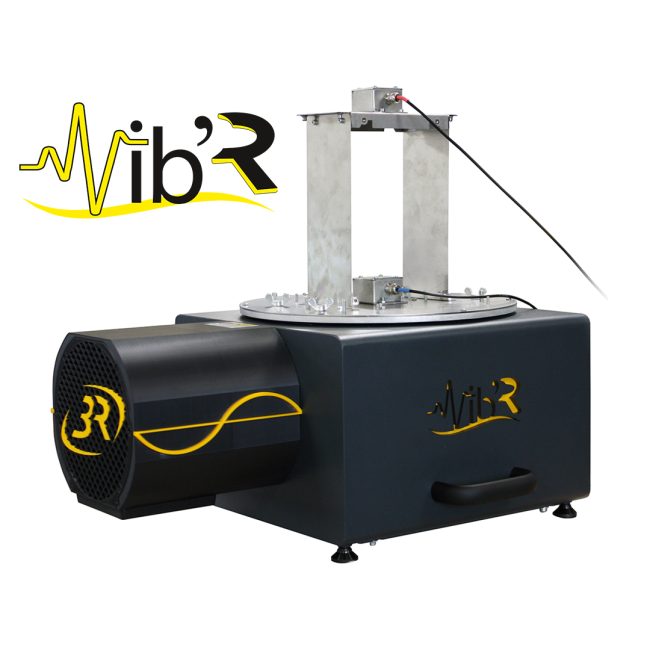
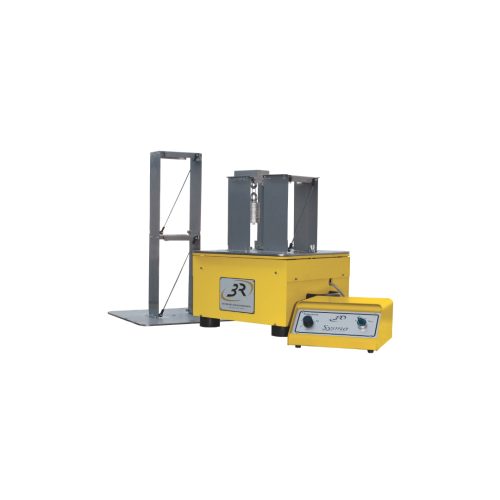
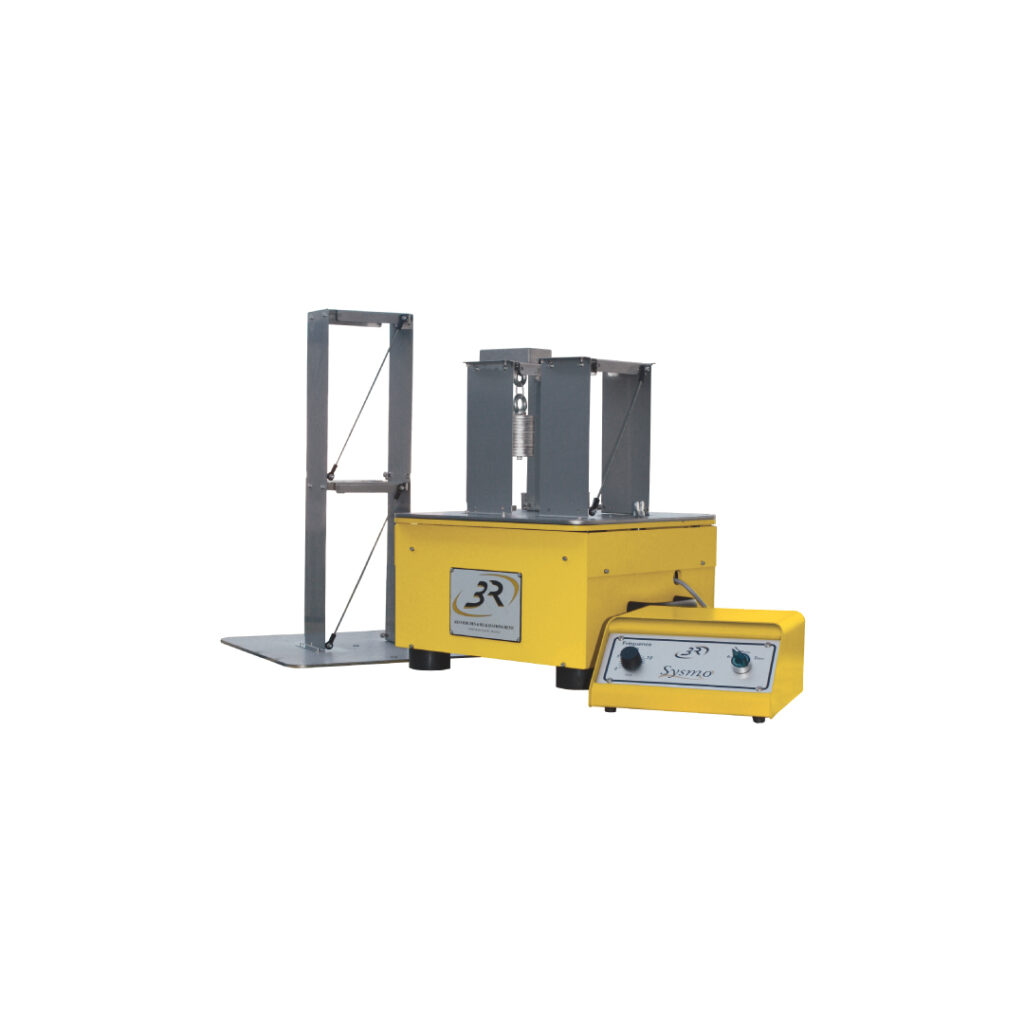
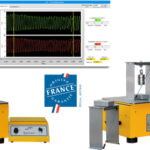
Help students understand the relationship between earthquake frequency and their hazard level. The study of complex Civil Engineering structures is essential to ensure the safety and durability of structures. This test bench enables the study of several technical solutions to be adopted for structures facing seismic shocks: the tuned mass system, structural reinforcement, height, and neoprene bearings. The rotating platform enables visualization of the effect of stress for different angles of incidence of the excitation. The removable structural elements enable visualization of their effectiveness in combating the effects of earthquakes.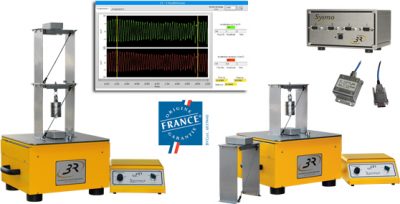
Characteristics:
- Heavy frame in welded and painted sheet metal, mounted on anti-vibration pads
- Oscillating platform on elastic supports, with indexable rotating platform
- Exciter with adjustable frequency from 0 to 20Hz, stroke 2mm
- Various sheet metal structures representing a building, with floors, bracing, suspension, pendulum mass and removable tie rods
- Control unit with isolator switch, start/stop button, frequency adjustment (0 to 20 Hz)
- Power supply 230V 50Hz 0.25kW
- Dimensions: L= 400 x W=400 x H= 220 mm
- Weight: approximately 40 kg
Option: Instrumentation
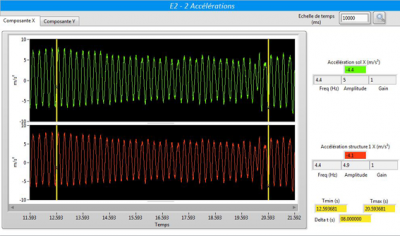
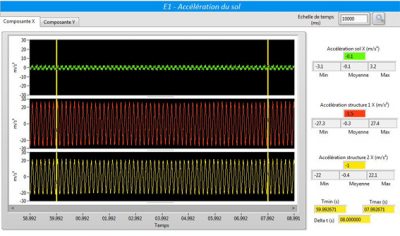
ACCELERATION MEASUREMENT AND VISUALIZATION DEVICE ON A STRUCTURE SUBJECTED TO AN EARTHQUAKE INCLUDING:
- Two triaxial accelerometers +/-30m/s² (3g) in metal housings, to be fixed at two points on the structure
- Power supply and conditioning unit for up to 4 sensors, 8 channels, with USB output
- Visualization software for PC (not supplied) (Virtual instrument developed on National Instruments LabVIEW platform), enabling comparison of accelerometer signals, performing measurements, comparing measurements with theory…