Evaluate the adhesion strength of your bonded, laminated or composite materials according to industrial standards
What is a peel test?
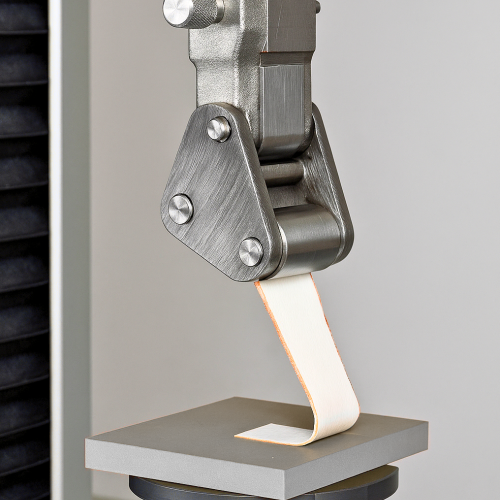
The peel test is a standardized method designed to measure the force required to separate two bonded materials from each other.
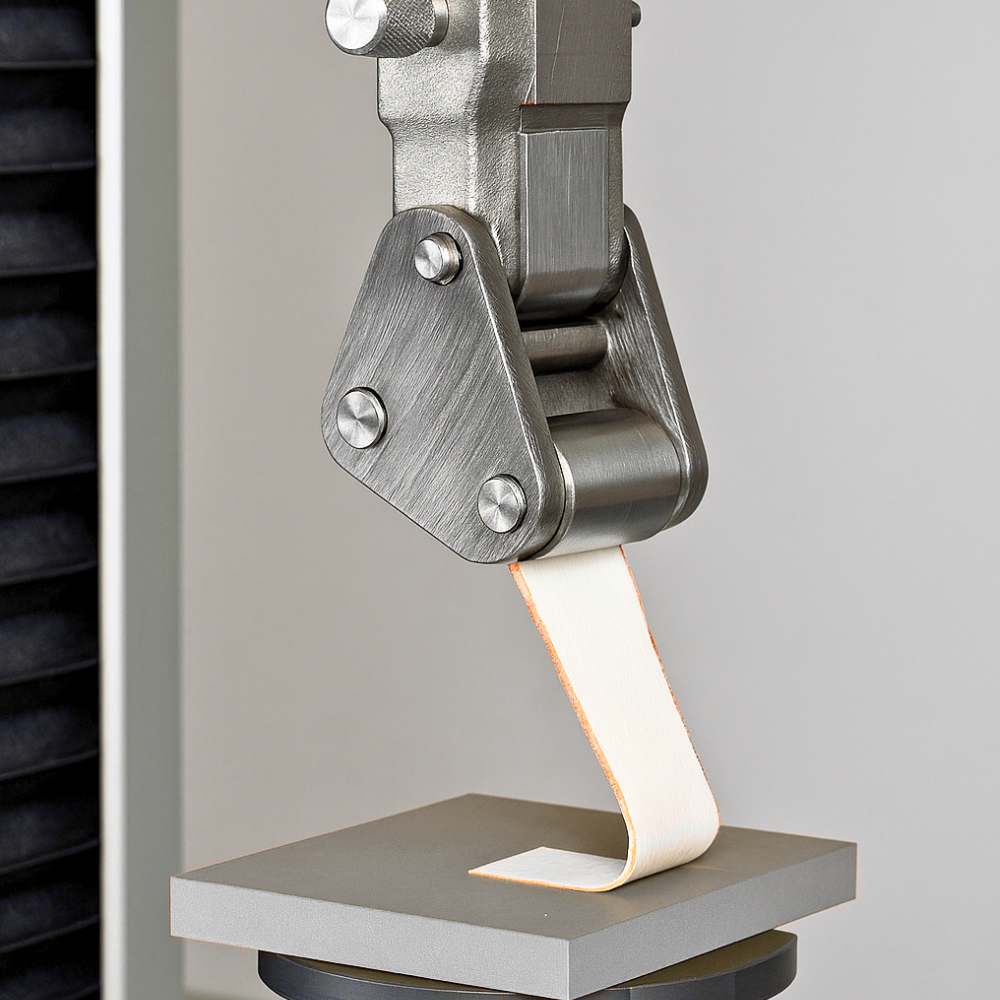
It enables the evaluation of the quality of a bonded, heat-sealed or laminated joint, and the detection of any adhesion weakness or delamination. The test consists of pulling one of the materials at a precise angle (90° or 180° depending on the standard) until failure or debonding, while measuring the required load.
Related standards
Peel tests are governed by several international standards, including:
ISO 11339: adhesive materials – 180° peel –ASTM D903: 180° peel on adhesive films –ISO 8510-1 / 2: peel of rigid adhesives –EN 28510-1: for adhesive tapes –ISO 4578: tensile peel on bonded joints
Materials concerned
The peel test is used to characterize adhesion or cohesion on: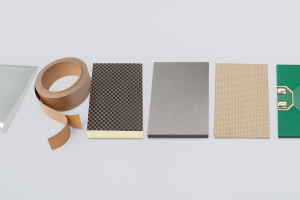
- Plastic films, multilayer films, flexible packaging
- Adhesive tapes, industrial adhesives, resins
- Laminated composites (carbon, glass, sandwiches)
- Bonded or painted metal plates
- Technical or coated textiles
- Connectors or assemblies on printed circuit boards (PCB)
Industrial sectors concerned
These tests are essential in the following sectors:
- Aerospace: control of laminates and structural bonding
- Automotive: verification of adhesion on foams, films, seals, panels
- Packaging and food industry: sealing of sachets, lids, plastic films
- Electronics: delamination on PCB, pads or heat-adhesive films
- Construction: bonding of coatings, composite panels
- Technical and medical textiles: tapes, patches, multilayer materials
Available accessories for peel tests
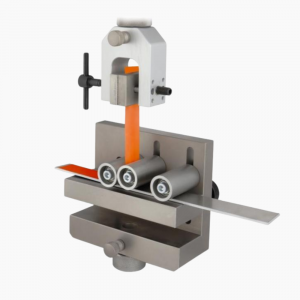
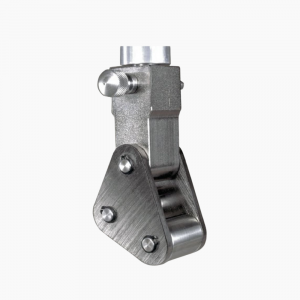
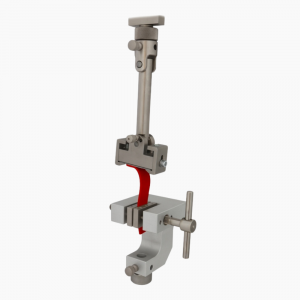
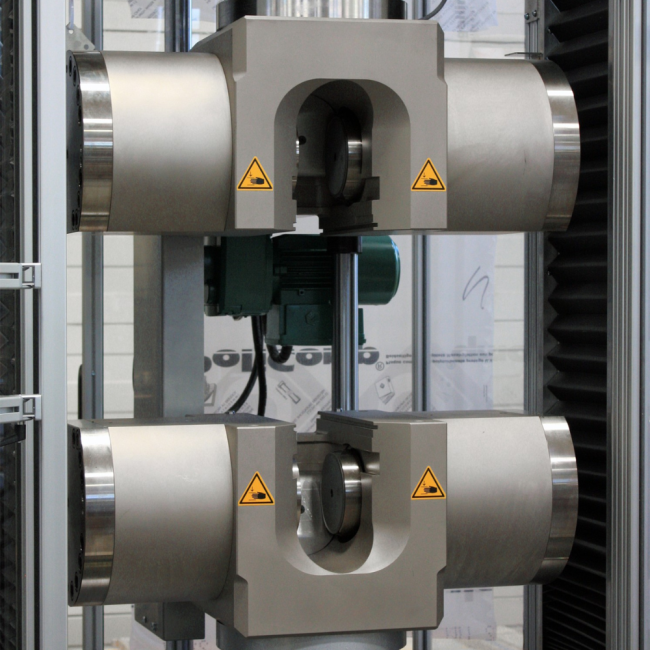
3R offers several specific tooling to guarantee perfect positioning and alignment during tests:
- Specimen supports for 90° or 180° peel
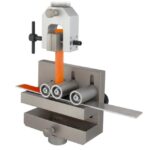
- Roller guide systems for constant angle maintenance
- Free-rotation counter-support devices
- And much more…