How to choose a tensile testing machine
Choosing a tensile testing machine often comes at a key stage for a laboratory or industrial facility, whether setting up a new laboratory, bringing testing activities in-house, replacing ageing equipment, increasing testing capacity or characterising new materials.
In every case, the decision involves much more than selecting a load capacity in kN. A suitable testing machine should take several factors into account:
- installation requirements
- materials being tested
- specimen dimensions
- applicable standards
- a suitable testing machine and load frame
- strain measurement
- test control software
- operator safety
As a French designer and manufacturer of testing machines, 3R Industries supports laboratories, R&D centres and industrial facilities in defining tensile testing solutions tailored to their testing procedures, materials and working environment.
Why invest in a tensile testing machine ?
A tensile testing machine applies a controlled load to a specimen or component in order to measure its mechanical behaviour, including elongation, yield strength, ultimate tensile strength, failure and strain.
The investment may be driven by several objectives, such as reducing outsourced testing, improving responsiveness, enhancing result traceability, meeting customer requirements or developing new in-house testing programmes.
For a laboratory manager, the objective is rarely to purchase only a testing machine. It is usually to implement a complete testing solution :
- a suitable testing machine and load frame
- a suitable testing machine and load frame
- sensors and extensometry
- sensors and extensometry
- test control software
- installation, training and maintenance
1. Define the materials and tests to be performed
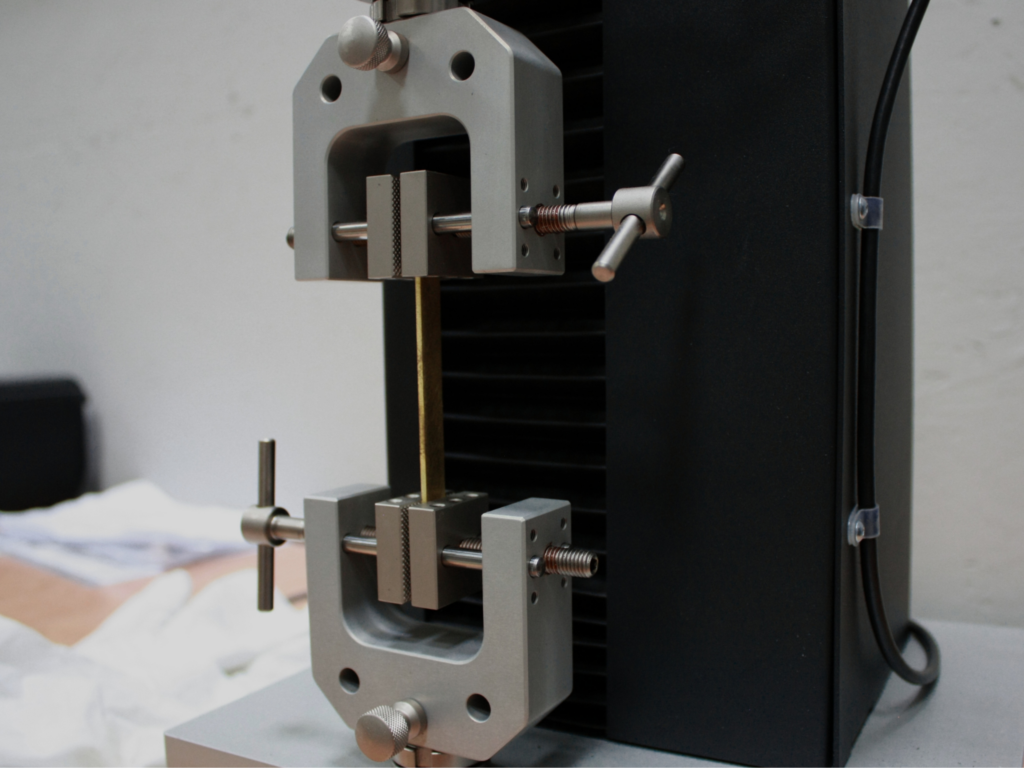
The first selection criterion is the type of material to be tested. Requirements vary significantly depending on the materials or products involved :
- mechanical assemblies or finished products
- metals
- polymers
- composites
- cables, wires or webbing
- textiles and rubber
- …
It is also important to define the specimen geometry, including flat specimens, round specimens, tubes, wires, cables, webbing, machined parts or specific components. This information directly determines the selection of tensile grips, fixtures and the required test space.
If the laboratory performs several types of mechanical testing, a universal testing machine may be more appropriate than a machine dedicated solely to tensile testing. Depending on the installed accessories, it can also perform compression, flexural, shear and peel testing.
2. Select the appropriate load capacity
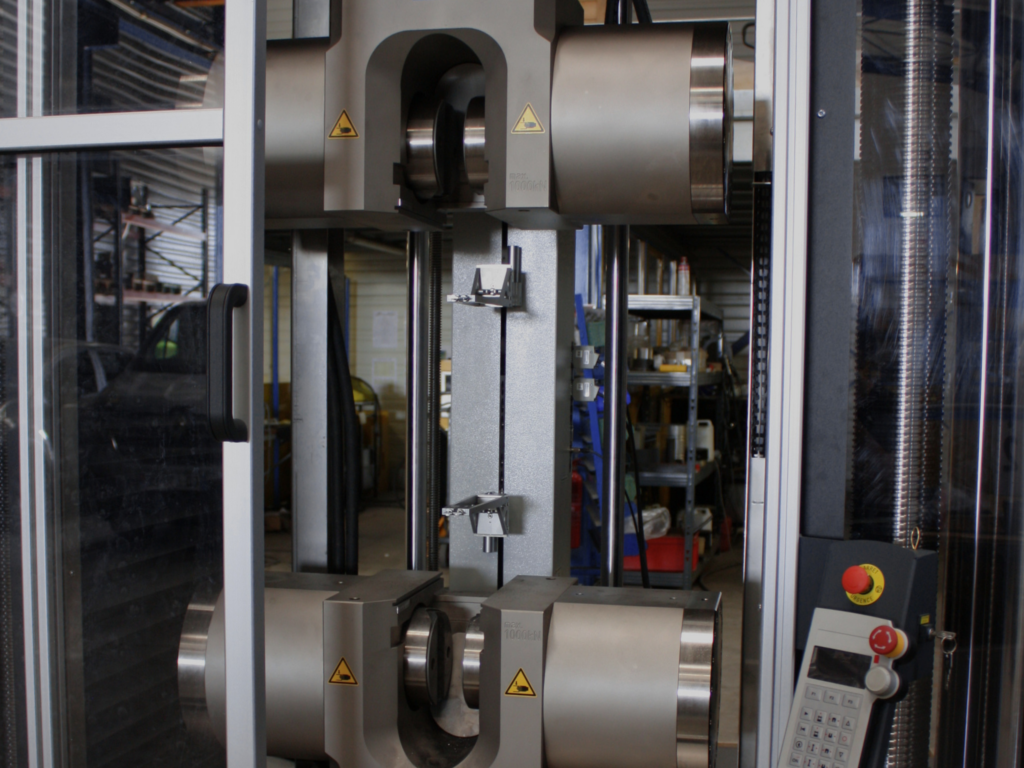
The load capacity of a tensile testing machine corresponds to the maximum force it can apply. It should be determined according to the strongest material being tested, the specimen cross-section and the expected maximum test load.
An undersized machine may restrict the available testing range, reduce safety margins or prevent certain specimen configurations from being tested. Conversely, an excessively oversized machine is not always the best choice for low-force applications, as the operating range may be less suited to day-to-day testing requirements.
The objective is therefore to find the right balance between current testing requirements, future laboratory developments and the required accuracy over the operating force range. Depending on the application, this may lead to a low-capacity, medium-capacity or high-capacity tensile testing machine.
3. Select the right grips, fixtures and extensometers
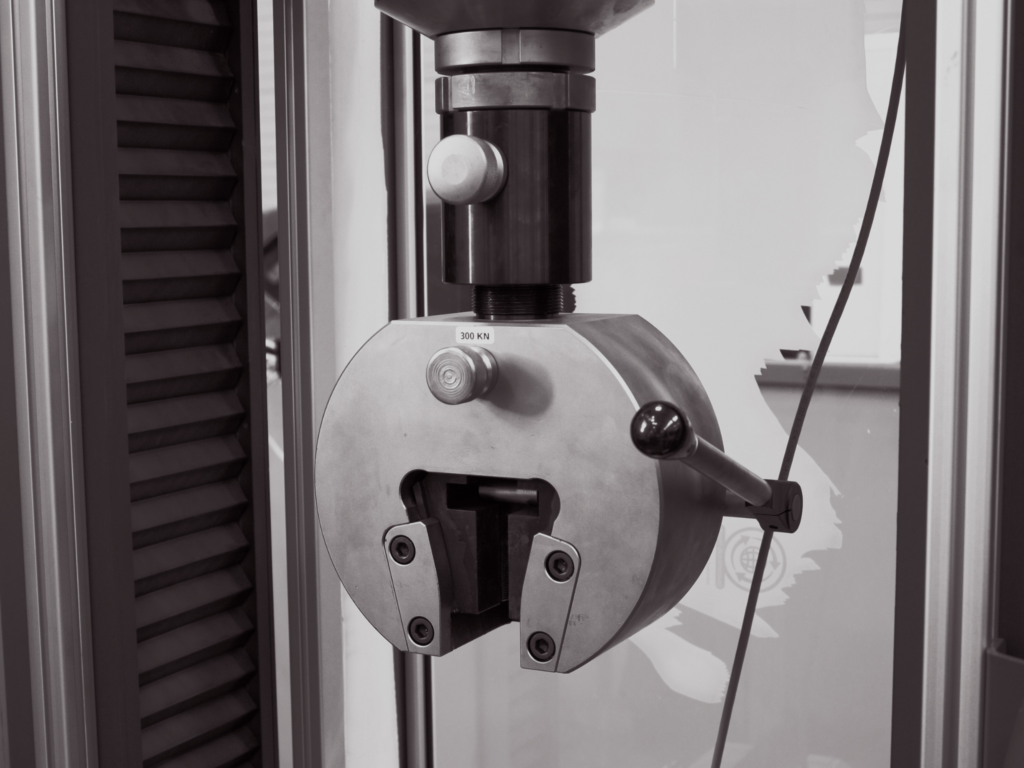
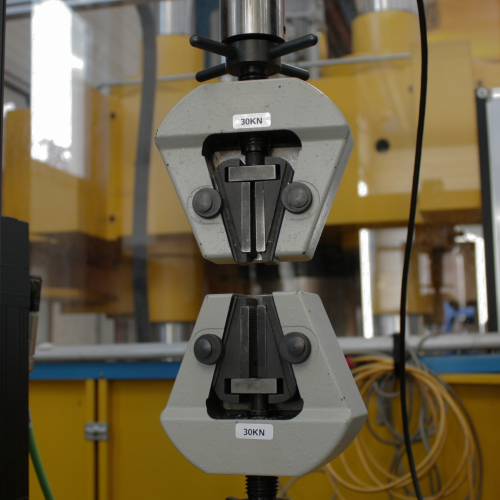
A tensile testing machine can only perform correctly when the gripping system is matched to the specimen. Tensile grips must hold the specimen securely without slippage, premature damage or misalignment.
Depending on the application, manual, pneumatic or hydraulic grips may be used. Testing cables, tubes, textiles, short specimens or fragile materials may require dedicated tensile testing fixtures.
Strain measurement should also be considered at an early stage. Crosshead displacement alone is not always sufficient to accurately determine specimen elongation. Where precise strain measurement is required, a tensile testing extensometer may be necessary. The selection depends on gauge length, measurement travel, required accuracy and the testing environment.
4. Do not overlook the software and technical support
The software is often a key factor in the day-to-day use of the testing machine. For a laboratory, effective software should allow users to :
- export data
- create test methods
- control the testing machine
- monitor test curves in real time
- calculate results
- generate reports
Test control software should therefore be selected with the same level of attention as the testing machine itself. Ease of use, test method management, traceability and report generation are all important, particularly when several operators share the same equipment.
Test control software should therefore be selected with the same level of attention as the testing machine itself. Ease of use, test method management, traceability and report generation are all important, particularly when several operators share the same equipment.
Checklist before requesting a quotation
To define a suitable testing configuration, it is useful to provide the following information :
- materials to be tested
- specimen type and dimensions
- expected maximum load
- applicable standards or test methods
- strain measurement requirements
- grip or fixture requirements
- test temperature
- expected testing volume
- required level of traceability
- laboratory installation constraints
This information enables us to recommend a configuration suited to your testing requirements, including load capacity, load frame, grips, extensometry, software, operator safety and associated services. The objective is to provide a solution tailored to your materials, testing procedures and laboratory environment.
Conclusion
Selecting a tensile testing machine should always begin with the intended application: materials, specimens, load capacity, grips, strain measurement, software, safety and laboratory environment. A properly configured machine improves test reliability, enhances traceability and supports the future development of the laboratory.
Do you have a tensile testing machine project? 3R Industries can help you define the appropriate load capacity, grips, instrumentation, software and associated services to configure a solution tailored to your testing requirements.
FAQ
What load capacity should I choose for a tensile testing machine ?
The required load capacity depends on the material, specimen cross-section and expected maximum test load. A sufficient safety margin should be maintained without unnecessarily oversizing the machine relative to the actual operating range. Typical examples include:
- 5 to 25 kN : low-force testing of plastics, textiles, films and elastomers
- 100 to 300 kN : engineering plastics, composites and mechanical components
- 400 kN, 700 kN or more : metal specimens, cables, assemblies and large cross-sections
When should an extensometer be used for tensile testing ?
A tensile testing extensometer is recommended whenever the actual specimen strain must be measured directly rather than being inferred from crosshead displacement. This is particularly important when determining Young’s modulus, yield strength or precise elongation values on metals in accordance with ISO 6892-1, plastics tested to ISO 527 or ASTM D638, composites and other low-strain materials.