Introduction
In a concrete laboratory, test reliability depends on more than compression testing machines and other major testing equipment. Small laboratory apparatus plays an essential role at every stage, from material preparation and fresh concrete testing to specimen preparation, curing and routine measurements.
For a concrete laboratory, ready-mixed concrete batching plant, precast concrete manufacturer or inspection body, these tests serve several purposes: verifying production consistency, validating a concrete mix design, assessing mechanical strength and documenting material compliance.
The choice of tests therefore depends on the application, whether assessing fresh concrete on site, testing concrete specimens in the laboratory, evaluating hardened concrete, inspecting precast concrete elements or assessing an existing structure.
Why carry out concrete testing ?
The performance of concrete depends on many factors, including the mix design, water content, aggregates, mixing, placement, compaction, curing and the age of the concrete at the time of testing.
Concrete testing is used to verify that the material meets the required performance for its intended application. Typical checks include :
- workability of fresh concrete
- workability of fresh concrete
- quality of specimen preparation and curing
- compressive strength
- indirect tensile strength by splitting
- flexural behaviour
- assessment of existing structures using non-destructive testing
In civil engineering laboratories, these tests form part of a complete workflow, from concrete preparation through to the final measurement.
Fresh concrete testing
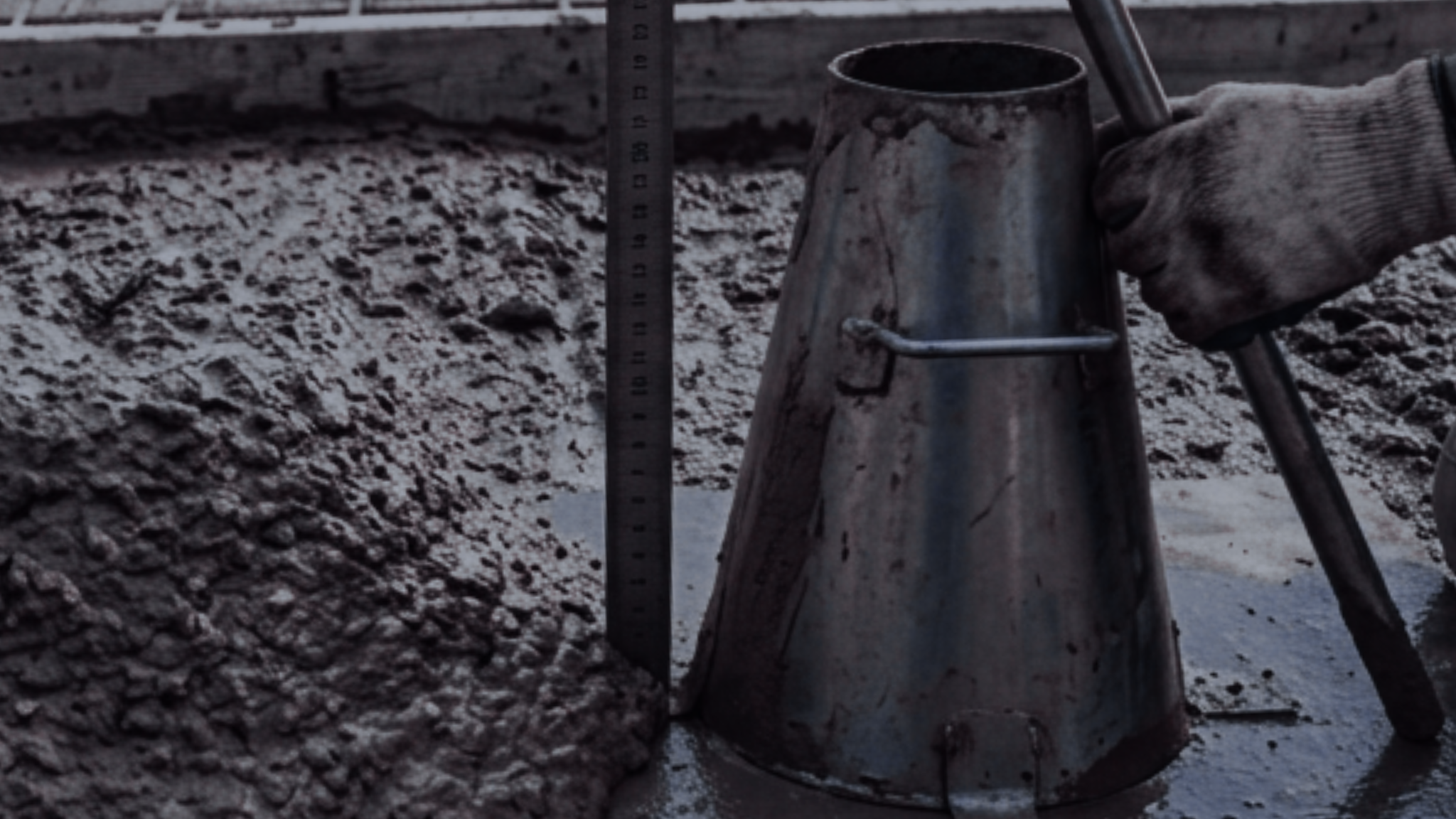
Fresh concrete tests are carried out before the concrete hardens. They are used to assess the concrete during placement by evaluating its flowability, consistency, workability, compactability, stability and air content.
Slump test
The slump test is one of the most widely used methods for assessing the consistency of fresh concrete. It involves filling a standard slump cone, lifting it vertically and measuring the resulting slump.
This test provides a simple indication of concrete workability. It is particularly useful for verifying the consistency of a mix design between different batches or deliveries.
Flow table test
The flow table test is used to measure the flowability of fresh concrete, particularly when the slump test alone is not sufficient to accurately characterise its behaviour.
The flow table is used to assess the flowability of fresh concrete in accordance with EN 12350-5 and DIN 1048.
Vebe consistometer and jolting table
The Vebe consistometer and jolting table are used to assess the consistency of low-workability concretes or concretes requiring a dynamic evaluation of their behaviour. These tests provide an indication of the ease of placement and compaction.
Self-compacting concrete testing
Self-compacting concrete (SCC) requires dedicated tests because its behaviour cannot be fully assessed using a conventional slump test. The objective is to evaluate its flowability, passing ability and stability.
Typical SCC tests include :
Air content measurement
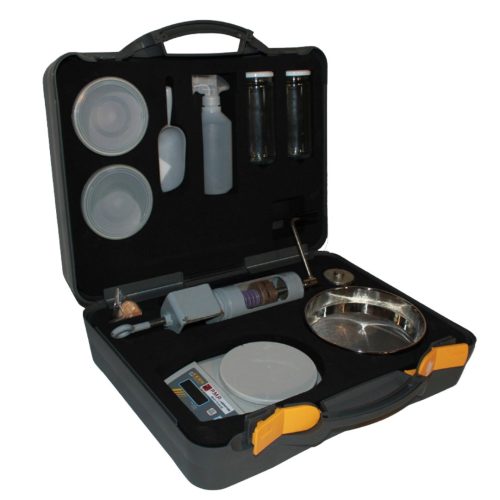
The amount of air contained in concrete influences its density, durability and in-service performance. On fresh concrete, this parameter is measured using a concrete air meter to determine the entrained air content.
Concrete air meters are used to determine the entrained air content of fresh concrete in accordance with EN 12350-7.
Preparing concrete specimens
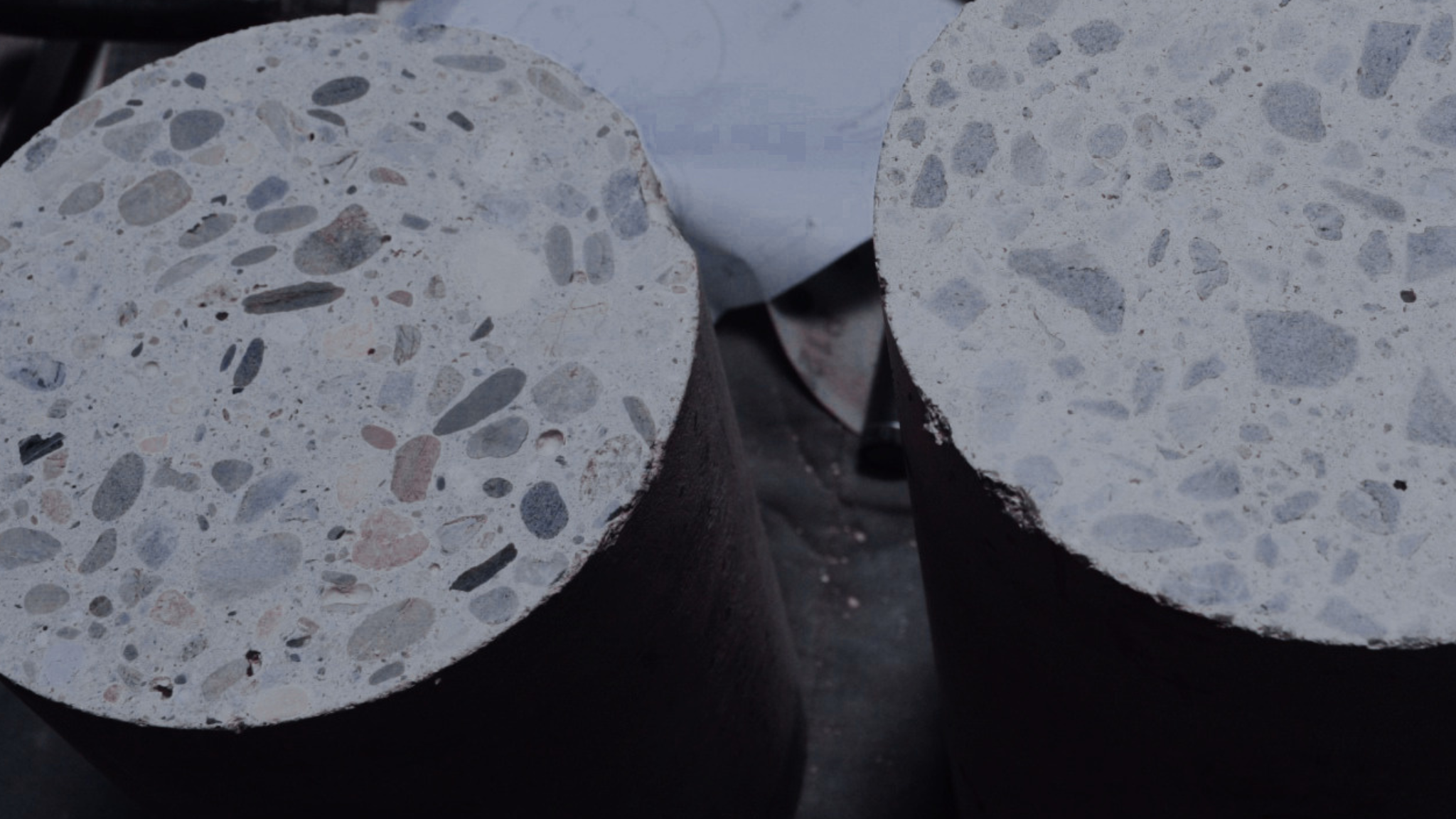
Before mechanical testing, concrete must be sampled, cast into moulds, compacted, cured and prepared correctly. This stage is essential, as test reliability depends as much on specimen quality as on the testing machine itself.
Specimen preparation
Concrete specimens may be cube, cylinder or prism specimens depending on the applicable test method. They are cast in suitable steel, cardboard or plastic moulds and compacted to minimise voids and produce representative specimens.
Specimen curing
Proper specimen curing is essential for obtaining reliable results. Temperature and humidity must be controlled in accordance with the applicable testing procedure.
Concrete specimen curing equipment includes curing tanks fitted with immersion temperature control units that maintain the water temperature at 20 °C ± 2 °C.
Capping and grinding
For compression testing, specimen faces must ensure uniform load distribution between the compression platens. Two preparation methods are commonly used : sulphur capping using a concrete specimen capping kit or grinding using a concrete specimen grinding machine.
The choice between capping and grinding depends on the specimen type, required accuracy, testing volume and applicable standards.
Technical recommendation — Whenever permitted by the applicable testing standard and specimen type, grindingshould be preferred. It eliminates the use of sulphur, reducing constraints for both operators and the laboratory environment while providing consistent specimen preparation before compression testing.
Mechanical testing of hardened concrete
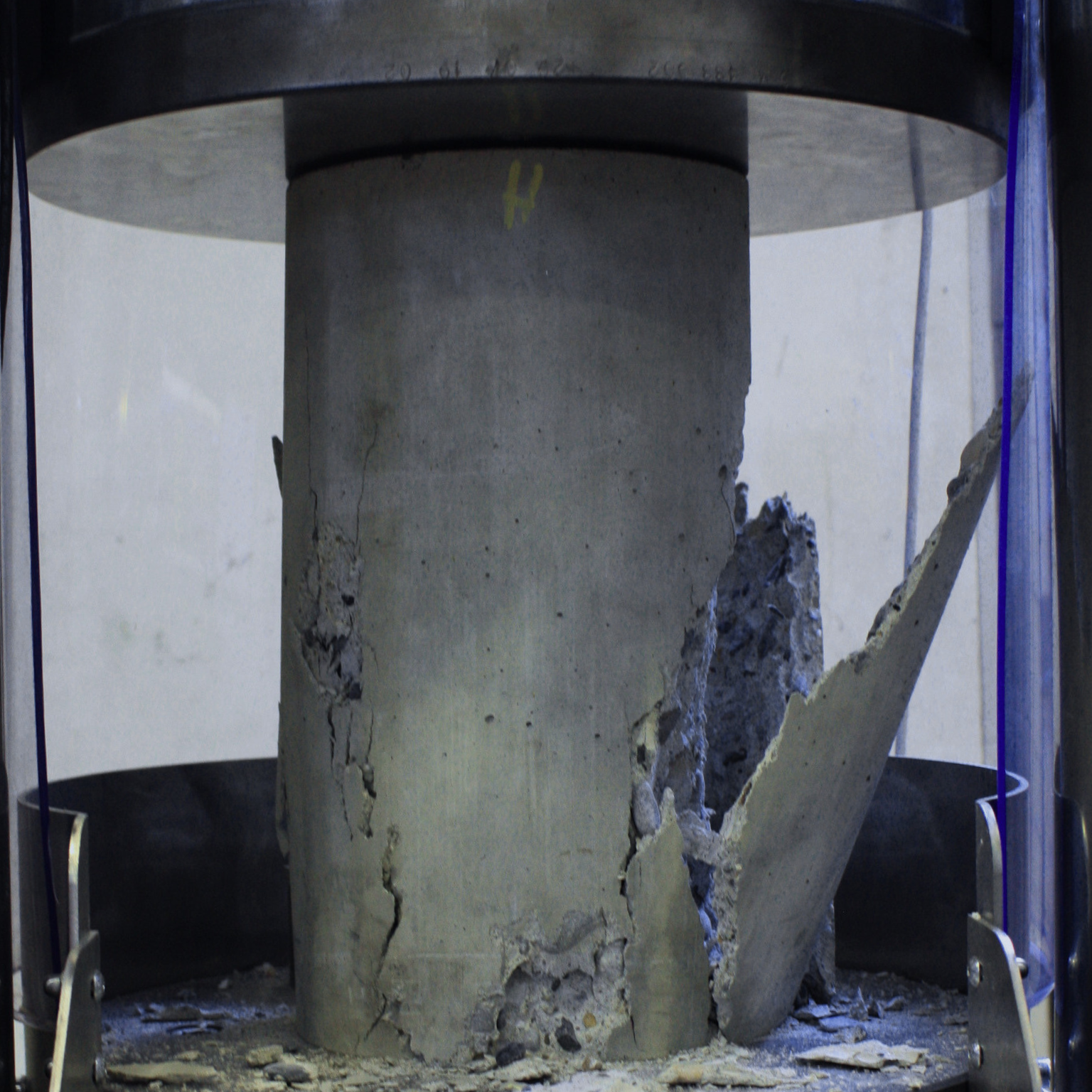
Hardened concrete testing is used to determine the mechanical performance of concrete after curing. Tests may be carried out on specimens, cores or specific structural elements.
Concrete compression testing
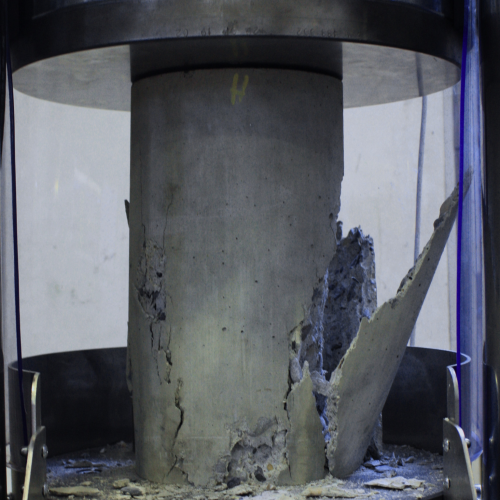
Compression testing is the reference method for determining the mechanical strength of hardened concrete. It consists of applying an increasing axial load to a specimen until failure.
Testing may be performed on cubes, cylinders or concrete cores. Accurate centring, load frame stiffness, specimen flatness and load rate control all have a direct influence on test reliability.
Concrete compression testing machines are available in configurations suitable for cube specimens, cylinder specimens and concrete cores. Depending on laboratory requirements, different load frames, capacities and control systems can be selected to comply with applicable standards, including EN 12390-4.
Splitting tensile test
The splitting tensile test provides an indirect measurement of the tensile strength of concrete. It is generally carried out on a cylinder specimen positioned horizontally and loaded diametrically.
This test is useful for evaluating tensile behaviour without performing the more complex direct tensile test. Splitting tensile fixtures ensure correct load distribution during testing in accordance with applicable standards, including EN 12390-6.
Flexural testing
Flexural testing is used to evaluate the behaviour of concrete or precast concrete products subjected to bending loads. Applications include beams, slabs, kerbs, precast concrete elements and other structural products.
Depending on specimen geometry, load requirements and the applicable test method, testing may require a flexural testing machine, a flexural/compression testing machine or a dedicated test frame.
Determination of Young’s modulus
Young’s modulus is used to evaluate the elastic behaviour of concrete by characterising the relationship between stress and strain within the elastic range.
This test is more highly instrumented than a conventional compression test and requires accurate load and strain measurement using suitable sensors and data acquisition systems. Depending on laboratory requirements, it may be carried out using an instrumented concrete compression testing machine or another testing machine specifically configured for Young’s modulus determination.
Non-destructive testing of concrete
Non-destructive testing (NDT) enables concrete to be assessed without causing damage. These methods are mainly used on site for structural assessment, inspections or investigations before intervention.
A concrete rebound hammer provides an indication of surface hardness, while a rebar detector is used to locate reinforcement and estimate concrete cover before coring, sawing or structural inspection.
In addition, a crack width measuring microscope can be used to monitor crack development and document inspection reports.
Conclusion
Concrete testing should be selected according to the condition of the material, specimen type, intended application and testing requirements. From fresh concrete through to hardened concrete mechanical testing, every stage contributes to reliable laboratory results and effective material quality assessment.
The choice of concrete testing equipment ultimately depends on testing volume, specimen formats, applicable standards and the desired level of automation.
FAQ
What is the most common test on hardened concrete ?
Compression testing is the most common method for determining the mechanical strength of hardened concrete.
Which tests should be carried out on fresh concrete ?
The most common fresh concrete tests assess consistency, flowability, workability and entrained air content, including the slump test, flow table test, Vebe consistometer, concrete air meter and self-compacting concrete tests.
Can non-destructive testing replace compression testing ?
No. Non-destructive testing provides valuable information during on-site inspections, but it does not replace mechanical testing performed on concrete specimens or cores.