Measurement of Thermal CONDUCTIVITY / EFFUSIVITY using the HOT WIRE / HOT PLATE / HOT RING / HOT ROD method
=> Hot Wire Conductivity Meter
=> Hot Plate Effusivity Meter
=> Hot Ring Diffusivity / Conductivity Meter
=> Hot Rod Conductivity Meter
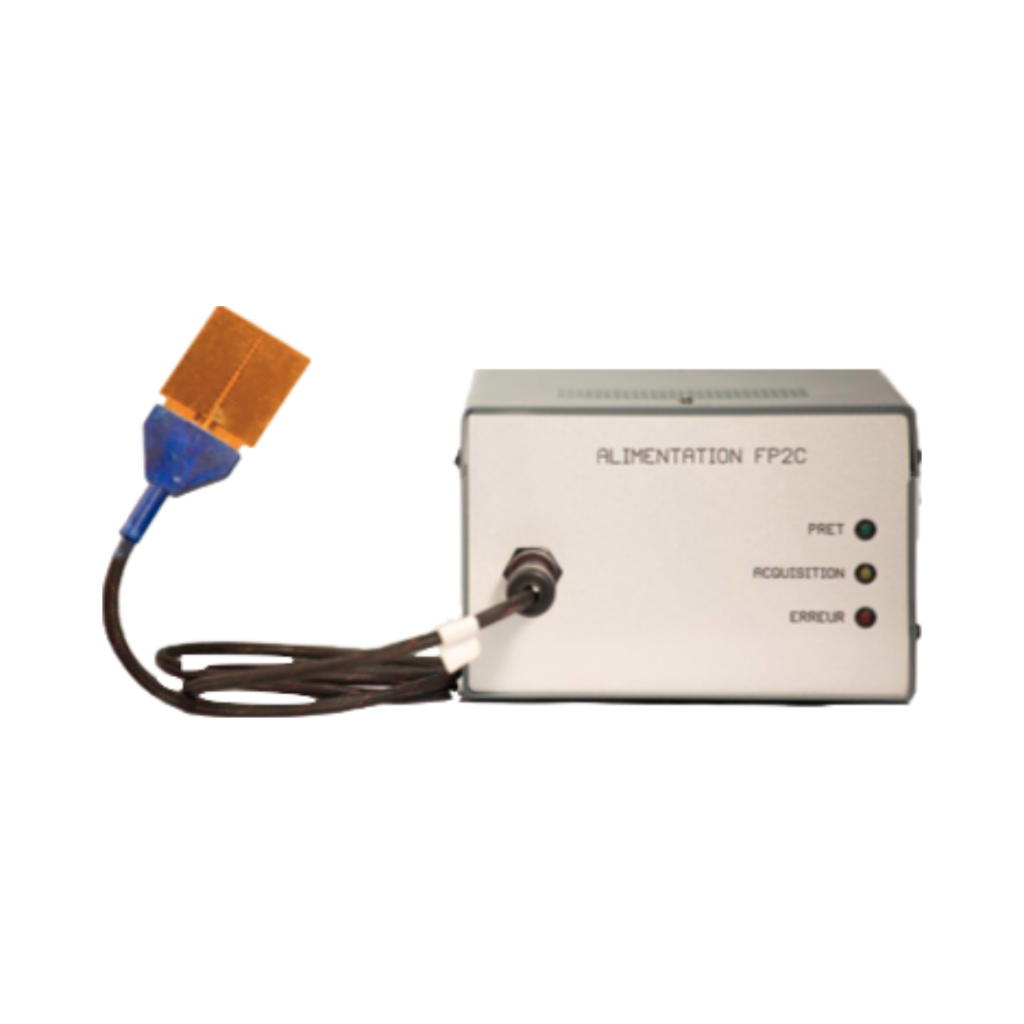
Model FP2C
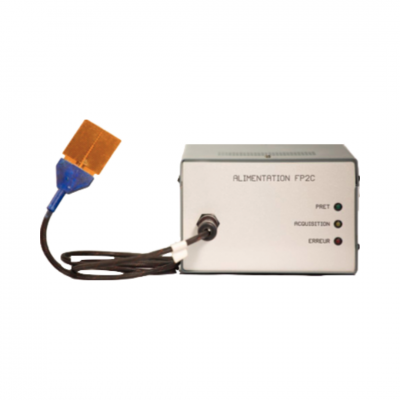 Thermal shock probe method
The hot wire technique is the standard transient method for measuring the thermal conductivity of insulating materials.
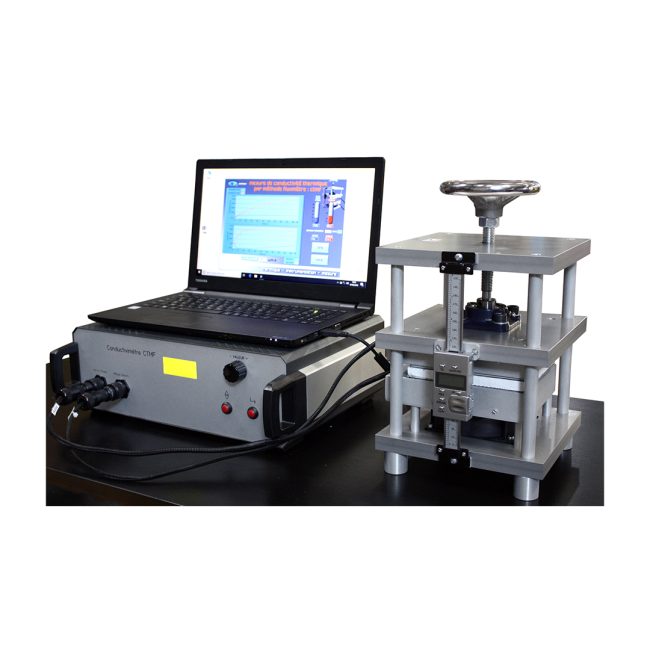
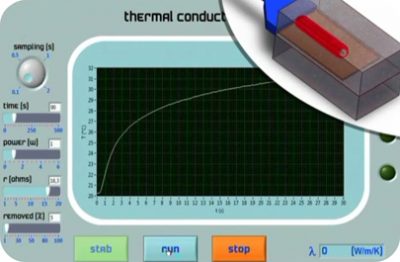
Device consisting of a thermal shock probe, to be placed between two specimens of the material to be characterized (symmetrical setup), an electronic data acquisition unit and graphical interface software to control tests and process results.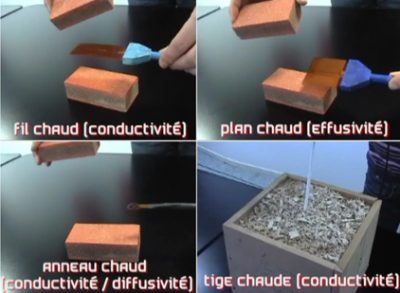
Principle
The principle of the thermal shock probe is to produce a localized low heating of the material (a few degrees above ambient temperature) and to measure this temperature rise over time (duration of a few minutes).
Through mathematical processing of this signal integrated in the supplied software, the thermal conductivity is identified.
This probe and device principle was developed by CSTB (Centre Scientifique et Technique du Bâtiment).
It also derives from standard ASTM D5930-97 and recommendation RILEM AAC 11-3.
Device Contents
- Signal conditioning unit and excitation management for hot wire
- 1 hot wire probe (50 mm)
- Management software license for hot wire and equivalent thermal conductivity calculation*
- Device and software user manual
Optional
- A PC
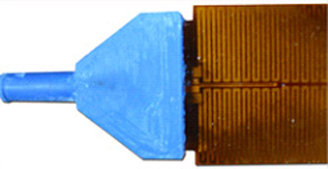
- 1 hot plate probe
- Thermal effusivity calculation software license*
- 1 hot ring probe
- Thermal conductivity and diffusivity calculation software license*
- 1 hot rod probe
- Thermal conductivity calculation software license*
* Software license without source code, modification and reproduction of the software is prohibited
Technical specifications
- Solid specimens, pastes, powders, fibers…
- Minimum specimen size: 60 x 40 mm, from a few mm thick for an insulator to a few cm for a conductor
- Conductivity range 0.02 to 5 W.m-1.K-1
- Measurement accuracy: 5 %
- Repeatability: 3 %
- Temperature range from -20 to 100° C
- Power supply: 220 V
Hot plate, hot ring option The hot wire conductivity meter can be completed with a hot plate probe (thermal effusivity estimation), a hot ring probe (thermal diffusivity estimation) and their associated software.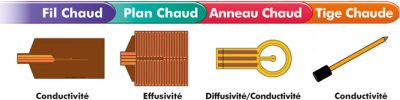
Measurement method
Most of the thermophysical characterization methods we develop are based on the use of thermal shock probes. They enable creation of a thermal excitation of the material; the response to this excitation depends on the thermal properties we are seeking.
The advantages of these methods are the speed of measurements and a certain flexibility regarding specimen size.
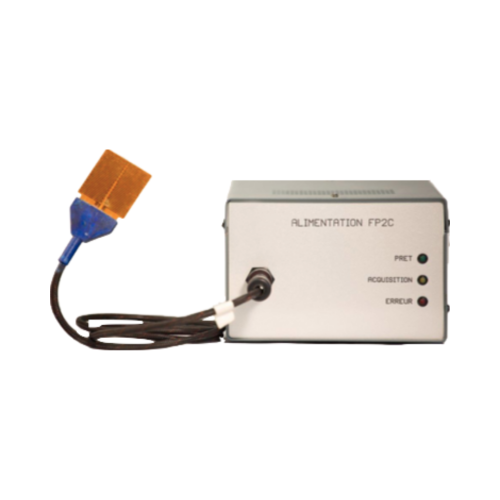
Depending on the specificities of the materials to be characterized or the thermal properties to be determined, simply connect the selected probe to the FP2C power supply and use the associated software. Hot Wire Method The hot wire method enables estimation of the thermal
conductivity of a material from the temperature evolution measured by a thermocouple placed near a resistive wire.
- Conductivity: from 0.02 to 5 W.m-1.K-1
- Measurement temperature from: –20 to 100°C
- Specimens: at least 60x40mm, from several mm thick for insulators to a few cm for more conductive materials
Hot Plate Method The FP2C power supply can be completed with a hot plate probe enabling measurement of the thermal effusivity of the material.
- Thermal effusivity: from 20 to 10000 J.m-2.K-1.s-1/2
- Measurement temperature: from -20 to 100° C
- Minimum specimen size: 50 x 50 mm, from a few mm thick for an insulator to a few cm for a conductor
Hot Ring Method
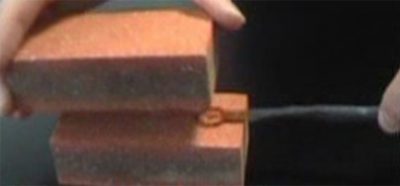 The FP2C power supply can also be completed with a hot ring probe enabling measurement of thermal conductivity and estimation of the thermal diffusivity of the material.
- Conductivity from: 0.5 to 50 W.m-1.K-1
- Measurement temperature from: –20 to 100° C
- Specimens: at least 25 x 25 mm, from a few mm thick for an insulator to a few cm for a conductor
Hot Rod Method The hot rod technique is similar to the hot wire method except that it is recommended for large volumes of material to be characterized (e.g.: bales of insulation, insulating wool, backfill, etc.).
- Conductivity from: 0.02 to 2 W.m-1.K-1
- Measurement temperature from: 10 to 50°C